The Red Devils are in Financial Hell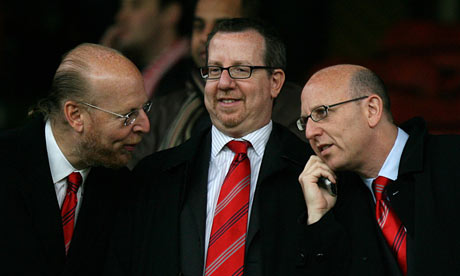
“The board has considered it appropriate to operate the business since its flotation in 1991 on a largely debt-free basis principally to ensure that the company would not come under financial pressure in the event of poor playing performance . . .
“When a football club is under financial pressure, some of the key assets which it can sell are its players and, at a time of poor performance, such sales are likely to make playing performance worse. Too much leverage could therefore drive a downward spiral in both team and financial performance.” – Sir Roy Gardner, Manchester United chairman, 5/27/05
Before we get to the new stuff on the Glazer family’s ****** and pillaging financial mismanagement of Manchester United, let’s get up to speed on how we got to where we are.
Back in 2005, when the Glazer family was attempting to take over Manchester United, the existing board tried to get some sort of guarantee about the financial future of the club. They were specifically looking for guarantees related to debt levels, player investment, team selection (an initial fear was that the Glazers would start wanting to fill out the team sheets on match days), the ownership of Old Trafford, and ticket prices. In spite of the fact that those assurances were never made, the directors sold their combined 76% stake in the club to the Glazers, who in turn compensated them with £810 million. That final number, though, didn’t come directly out of the Glazer family accounts; only about £270 million did.
The remaining £540 million was paid for with loans taken out by the Glazers. Those loans have huge debt servicing costs (read: payments); up through June 30th, 2009, Manchester United had spent £325 million just paying the interest on the loan. Since the principle wasn’t paid, the loan has now ballooned up to about £700 million. Servicing that loan debt’s interest alone will cost the club about £70 million this year.
Furthermore, that loan is really two loans. One loan is about £500 million; that’s a loan in the club’s name, and is at a staggering 21.5% interest rate. The other loan is about £200 million; this loan was taken out by the Glazers, using their shares in Manchester United as collateral. The interest on that loan is 14.25%.
In 2008, the club couldn’t afford to pay this debt; in fact, the club posted a £21.4 million pound loss. In 2009, they would’ve added about £10 million to that had they not sold Cristiano Ronaldo (his sale allowed them to announce a profit of £48.2 million instead of a £31.8 million loss).
It’s not too much of a reach to say that United is hurting for cash. Last week, the Glazers announced a bond plan to raise £500 million in extra funds to help pay down their loans; they also announced plans to sell their training ground at Carrington Road to a holding company, which they would then lease back to themselves.
The Glazers seem dedicated to working through the debt problem at Manchester United. So dedicated, in fact, that they apparently felt it was a good idea to write in a little, ah, performance bonus into the fine print of their bond deal. That “bonus”, should they find enough investors, comes out to be about £130 million.
That’s right, folks: the Glazers have written a plan to take £130 million out of Manchester United into their bond prospectus.
If that doesn’t irritate you, the breakdown of where the money can come from will:
* Up to £70 million can be taken out of the club’s cash reserves (aka “the Ronaldo money”).
* £25 million would be paid in dividends.
* The Glazers would also be entitled to 50% of Manchester United’s “consolidated net income”. Last year, that would have been £23 million.
* £6 million would be paid to the Glazers in “administration in management services.”
* £3 million would additionally be paid “in respect of services provided by directors, officers, or other employees” for Manchester United holding companies owned by the Glazers.
That’s not money that’s going directly into the Glazer family vacation fund, of course. It’s being used to pay off the second loan: the one at 14.25% interest that rolls up to be a lot less than the much larger loan at a much higher interest rate. The difference between the two? The second one is in the Glazer’s name.
So, plainly put, they’re not paying off Manchester United debt with the bond deal; they’re paying off their own personal debt. Manchester United Supporters’ Trust chair Nick Towle sums up the entire situation like this:
“It is a shocking picture. These are immense amounts of money being leaked out of United to pay banks, lawyers, the Glazers themselves and interest, to pay for a takeover none of the supporters, or the United board itself, wanted.
“United’s success and profits could have been used to keep ticket prices affordable or invest in the team but instead we see this heartbreaking waste, just because one family ultimately hopes to make a profit from the club.”It’s really hard not to agree with Nick on that.
Avoiding The Drop Blog 

 No factual arguing this time either I see...


